
Women in Mining
Organization: Women in Mining
Area: Gender Justice in Extractives & Just Energy Transition
Country: Senegal, West Africa
In Senegal, extractive industries are framed as engines of national development. But for many women living along coasts and mining regions, the reality is different. They sustain local economies through fishing, trade, and small businesses, yet bear the social and environmental costs of extraction without sharing in its benefits. When decisions are made about land, compensation, or energy transition, their voices are absent or reduced to token participation.
As new projects expand under the push of a just energy transition, there is a risk of further marginalising women. Women in Mining is working to change that by organising women not as beneficiaries, but as decision-makers.
A FEMINIST NETWORK ROOTED IN THE EXTRACTIVE AND ENERGY SECTORS, WIM WORKS AT THE INTERSECTION OF GENDER JUSTICE, ECONOMIC RIGHTS, AND ENERGY TRANSITION.
With support from Leading from the South, its PARI JUSTE project has focused on reducing gender inequalities while repositioning women as political actors shaping the future of these industries.
THEIR WORK SPANS KNOWLEDGE, LEADERSHIP, ALLIANCES, AND POLICY INFLUENCE.
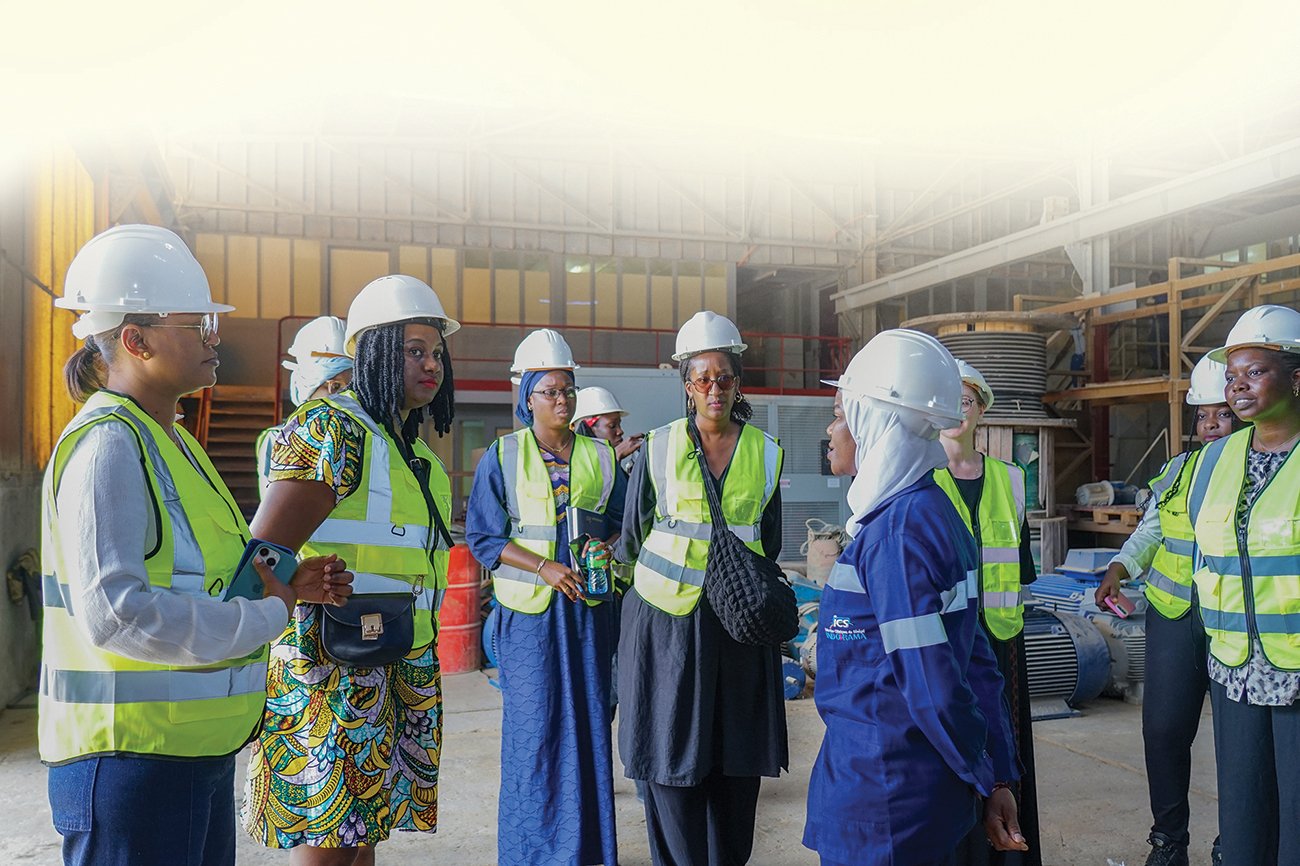
As understanding deepened, conversations shifted from abstract policy to lived futures. Young women began proposing solutions and asserting their role in national transformation. Through training, organising, and youth engagement, 268 people strengthened their understanding of gender and energy justice, while young women began shaping conversations on digital innovation and green entrepreneurship. At the same time, women moved into positions of influence. Five now sit in formal decision-making bodies, including Fama Sarr, a leader from Saint-Louis, who was appointed to a regional committee on a major gas project after years of being unheard.
At the national level, Women in Mining Senegal now contributes to hydrocarbons policy development, participates in the evaluation of mining and energy codes, and works within a coalition of 14 organisations shaping a just energy transition.
WOMEN ARE NO LONGER ON THE MARGINS OF EXTRACTION. THEY ARE INFLUENCING HOW ITS FUTURE IS DEFINED.